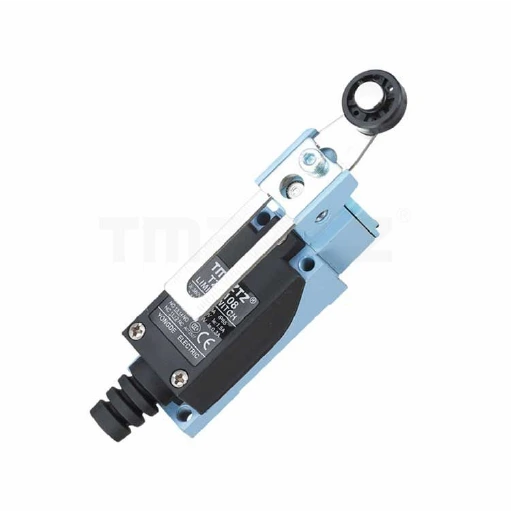
An IP67 limit switch built around three independent sealing layers, from the plunger down to the cable entrance. Every model leaves the factory with a 3m or 5m cable already potted in.
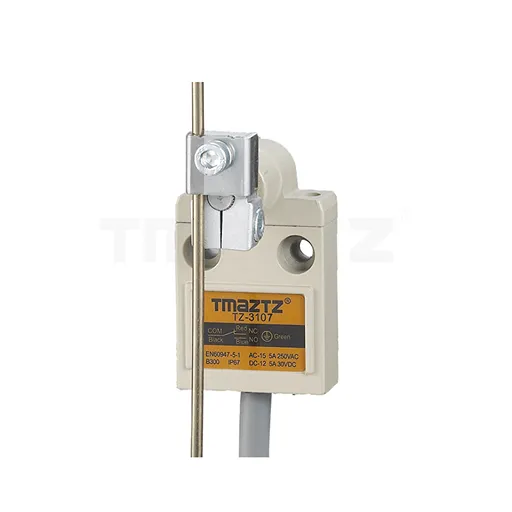
WHAT MAKES THE TZ-3 SERIES
The plunger section closes through a nitrile rubber packing seal and a diaphragm. The switch section sits under a rubber cap. The cable entrance is filled with encapsulating material, so each barrier guards its own layer.
Standard models ship with a 3m or 5m cable already potted into the body. Installers skip gland assembly on site, and the seal arrives tested from the production line.
The SPDT contact block starts at 15mΩ initial contact resistance. One three-terminal layout covers interlock and signal feedback wiring in the same unit.
The enclosure is sealed to IEC IP67 and withstands temporary submersion. Splash zones, washdown areas and condensing humidity stay outside the contact chamber.
Plunger versions mount flush in a row with adjacent units. Multi-point detection fits into narrow machine frames where spacing is tight.
Field case: a parking equipment builder in New York first specified the IP65-rated TZ-8108 on a semi-open structure. Moisture ingress showed up after the first wet season, and we moved the application to the IP67-rated TZ-3169 with sealing compound at the base and an adjustable back strap. Read the full context on the automated parking page.
WHERE TZ-3 FITS
Semi-open parking decks expose switches to condensation and wind-driven rain. A New York parking builder moved to the TZ-3169 after moisture ingress defeated an IP65 unit on the same structure.
Hoistways collect humidity along the shaft, and landing-level detection points feel it first. TZ-3 plunger models handle floor detection where damp air is a constant condition.
Coolant spray and chip washdown surround every switch on a machining center. The triple-sealed body keeps cutting fluid away from the contacts through continuous cycling.
QUICK MODEL SELECTION GUIDE
01
The striker travels straight down onto the head and the area sees water or condensation. Pin and booted plungers take direct axial actuation.
02
The striker comes in from the side or sweeps across the head at an angle. Roller and cross roller plungers accept lateral movement cleanly.
03
Cams or dogs sweep past the switch and call for rotary actuation. Lever models operate at 5.69N with 40 degrees of overtravel.
04
The target arrives with bounce, overshoot or an inconsistent direction. Spring actuators work from any approach angle at a light 1.47N.
DOCUMENTATION