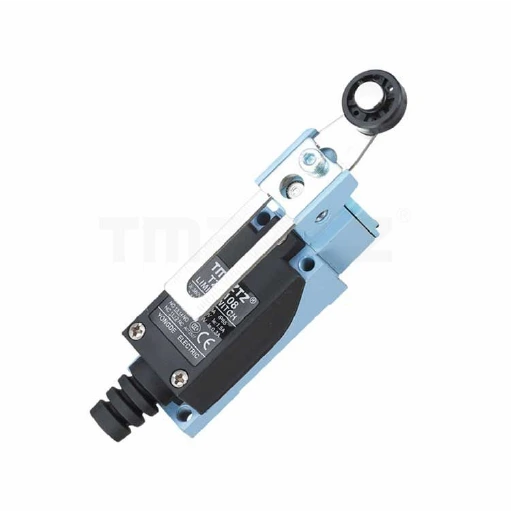
A sealed aluminum limit switch with the TM general-purpose core built in for high breaking capacity and high durability. DC models add a magnetic blowout X core that suppresses arcing in DC control circuits.
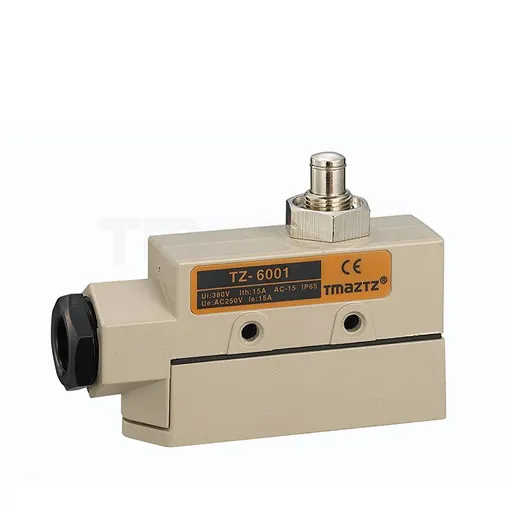
WHAT MAKES THE TZ-6 SERIES
The switching element is the TM general-purpose basic switch. High breaking capacity and high durability come built into every TZ-6 model. One proven core carries the whole series.
Take off the protective cover and the terminals face the front. Wiring lands straight in during panel work. Versions with a ground terminal carry the CE marking.
Contacts carry AC 250V 15A resistive, with a 30A surge rating on the NC side. The headroom suits inductive loads and frequent cycling. Electrical life reaches 500,000 operations.
DC variants build in an X basic switch with magnetic blowout. The magnet pulls the arc off the contacts and quenches it quickly. DC control circuits keep stable switching over a long service life.
The sealed type meets IP65 against dust and water jets. The aluminum shell protects the core in humid and oily stations. General-purpose versions in the same family rate IP60.
Sealed-type models meet IP65. General-purpose models in the TZ-6 family meet IP60. Every model ships with an M20×1.5 cable gland as standard.
WHERE TZ-6 FITS
Crane control panels run DC contactor coils and brake circuits. The magnetic blowout X core suppresses the arc each time those circuits break.
Machine rooms and shaftways need sealed switch points that survive years of service. The IP65 aluminum body holds its rating through dust and humidity cycles.
Axis limits and door interlocks switch inductive DC loads on many machine tools. The 15A AC rating and magnetic blowout DC models cover both sides of the panel.
QUICK MODEL SELECTION GUIDE
01
The striker comes straight down onto the switch head. Plunger heads handle direct vertical approach, with roller versions for angled contact.
02
The switch mounts through a hole in the panel or door. Panel mount plungers sit flush and keep the actuator on the working side.
03
The striker sweeps past the switch rather than hitting it head-on. Roller levers convert lateral movement into a clean trip point.
04
The striker overshoots or arrives from varying directions. The spring rod absorbs the variation and trips from any approach angle.
DOCUMENTATION